
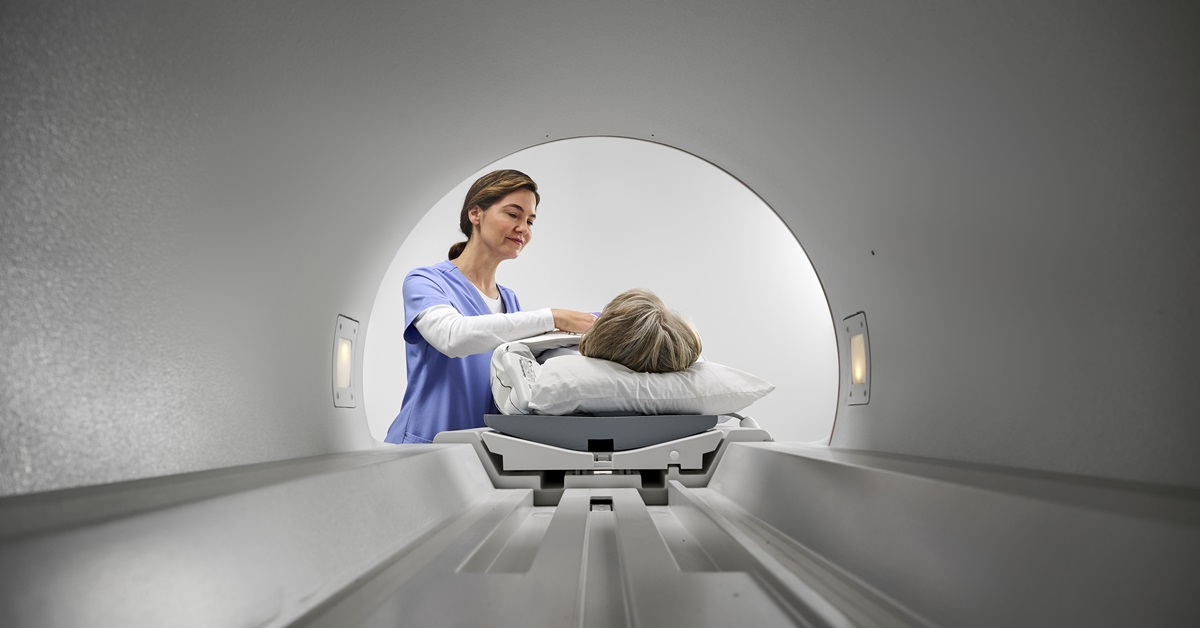


Radiology departments are under increasing pressure to deliver more imaging services with limited resources. Growing demand, workforce shortages, and increasingly complex imaging protocols are forcing departments to rethink how radiology operations are managed.
MRI, in particular, sits at the centre of this challenge. As one of the most powerful diagnostic tools available, MRI examinations are becoming more clinically sophisticated, yet the operational demands placed on technologists and imaging departments continue to grow.
In Australia, demand for diagnostic imaging continues to rise. Australians receive tens of millions of Medicare‑subsidised diagnostic imaging services each year, reflecting the growing reliance on imaging to support modern clinical decision‑making.¹ ²
Access to MRI services remains an important part of this discussion. As Professor John Slavotinek, President of the Royal Australian and New Zealand College of Radiologists (RANZCR), has noted when discussing MRI access in Australia:
“There are still too many patients who are unable to easily access a Medicare rebate for undergoing an MRI scan.”³
Improving access to MRI services is therefore critical to ensuring equitable health outcomes for patients while supporting clinicians in delivering timely diagnoses.³ ⁴
The Complexity of MRI Workflow
MRI workflow is more complex than many people realise. Technologists must coordinate patient preparation, coil selection, protocol setup, and positioning while maintaining communication with patients and ensuring high diagnostic image quality.
Over the course of a typical shift, technologists may perform numerous examinations, requiring repeated patient transfers and frequent equipment adjustments. Each step introduces opportunities for delays, inefficiencies, or patient discomfort that can ultimately impact departmental throughput.
Patient behaviour also plays a critical role in MRI image quality. Motion caused by breathing, discomfort, anxiety, or involuntary movement can introduce artefacts that compromise diagnostic value and require repeat scanning. Motion artefacts have been shown to affect a significant proportion of MRI examinations, increasing scan times and operational burden.⁵ ⁶
Improving MRI workflow therefore requires a holistic approach that considers not only the scanner itself, but the entire imaging environment and patient journey.⁵ ⁷
Predictability as a Foundation for Operational Efficiency
One of the most important factors in improving radiology workflow is predictability.
When exam durations, system behaviour, and reconstruction processes are consistent, departments can schedule more effectively and technologists can operate with greater confidence. Predictability reduces variability across exams and helps radiology teams manage increasing workloads.
GE HealthCare MRI technologies such as AIR™ Recon DL deep‑learning reconstruction, motion‑corrected imaging techniques including PROPELLER and 3D PROMO, AIR™ Coil technology, and integrated in‑line post‑processing tools are designed to support this level of operational consistency. Advanced reconstruction innovations such as Sonic DL™ further accelerate image reconstruction and workflow.⁹ ¹⁰
High‑performance gradient systems available on platforms such as SIGNA™ Hero 3.0T, SIGNA™ Premier 3.0T, and SIGNA™ Voyager 1.5T enable fast, high‑quality imaging across a wide range of clinical applications.¹¹
By enabling faster acquisition, improved signal performance, and reliable image reconstruction, these technologies help reduce scan variability and support more predictable imaging workflows.
Four elements are particularly important in achieving more predictable MRI operations:
- Predictable protocol duration, allowing departments to schedule patients more accurately
- Predictable system behaviour, ensuring scanners perform consistently across exams
- Predictable reconstruction output, enabling clinicians to receive images quickly and reliably
- Predictable patient tolerance, reducing motion and minimising the need for repeat imaging
These elements are becoming increasingly important as imaging demand continues to rise, particularly in healthcare systems such as Australia’s, where imaging utilisation has grown faster than population growth.¹ ²
Improving the Patient Experience to Improve Workflow
Patient experience is closely tied to operational performance. MRI examinations can be intimidating due to scanner noise, exam duration, and the confined imaging environment.
Innovations such as wide‑bore MRI system design, integrated patient comfort and entertainment features, and lightweight, flexible AIR™ Coils can improve patient comfort while maintaining excellent signal performance. Improved comfort has been shown to reduce anxiety‑related movement and improve scan success rates.⁸
Improved system design and workflow tools can also simplify patient positioning and exam setup, helping technologists work more efficiently while keeping patients comfortable throughout the examination.
When patients feel supported and informed, they are more likely to remain still during scans, reducing motion artefacts and improving image quality. This can significantly reduce the need for repeat imaging and help maintain efficient scanning schedules.⁵ ⁸
Supporting the Future of Radiology Operations
As imaging demand continues to grow, radiology departments will require solutions that support both clinical performance and operational efficiency.
MRI platforms such as SIGNA™ Hero 3.0T, SIGNA™ Premier 3.0T, and SIGNA™ Voyager 1.5T are designed to balance high‑performance imaging with workflow tools that support technologists and improve the overall patient experience. Technologies that reduce variability, accelerate reconstruction, and improve patient tolerance can help departments manage rising imaging volumes without compromising diagnostic quality.⁹ ¹¹
By focusing on workflow predictability, technologist support, and patient‑centred design, healthcare providers can better manage increasing imaging volumes while maintaining high standards of diagnostic care.
Ultimately, streamlining radiology operations is not simply about scanning more patients. It is about creating an imaging environment that allows clinicians, technologists, and patients to work together more effectively to deliver better care.
Sources
Footnotes
- Australian Institute of Health and Welfare (AIHW). Diagnostic services overview. Australian Government. https://www.aihw.gov.au/reports-data/health-welfare-services/diagnostic-services/overview
- Royal Australian and New Zealand College of Radiologists (RANZCR). Further MRI reform required for fair access says RANZCR. Media release, 20 March 2024.
- Swannell C. Deregulate all MRIs to ensure equity nationwide, says college. Health Services Daily, 22 March 2024.
- Zaitsev M, Maclaren J, Herbst M. Motion artifacts in MRI: A complex problem with many partial solutions. Journal of Magnetic Resonance Imaging. 2015;42(4):887–901.
- Sommer K, Saalbach A, Brosch T, et al. Correction of motion artifacts using a multiscale fully convolutional neural network. American Journal of Neuroradiology. 2020;41(3):416–423.
- Tripathi VR, Tibdewal MN, Mishra R. A survey on motion artifact correction in magnetic resonance imaging for improved diagnostics. SN Computer Science. 2024.
- Edelman V, Chassidim H, Rabaev I. Reducing patient movement during magnetic resonance imaging: A case study. Electronics (MDPI). 2025;14(4):668.
- GE HealthCare. AIR™ Recon DL – MR image reconstruction. GE HealthCare product documentation.
- FDA clears GE HealthCare’s AIR Recon DL for 3D and motion‑insensitive imaging applications. Applied Radiology, 30 September 2022.
- GE HealthCare. Sonic DL™: Life‑speed imaging, now in 3D. GE HealthCare product information.
- Trademark notice: AIR™, SIGNA™, AIR™ Recon DL, Sonic DL™, SIGNA™ Hero, SIGNA™ Premier, and SIGNA™ Voyager are trademarks of GE HealthCare. All other product names are trademarks or registered trademarks of their respective owners
The information on this website is aimed exclusively at Licensed Healthcare Practitioners.
